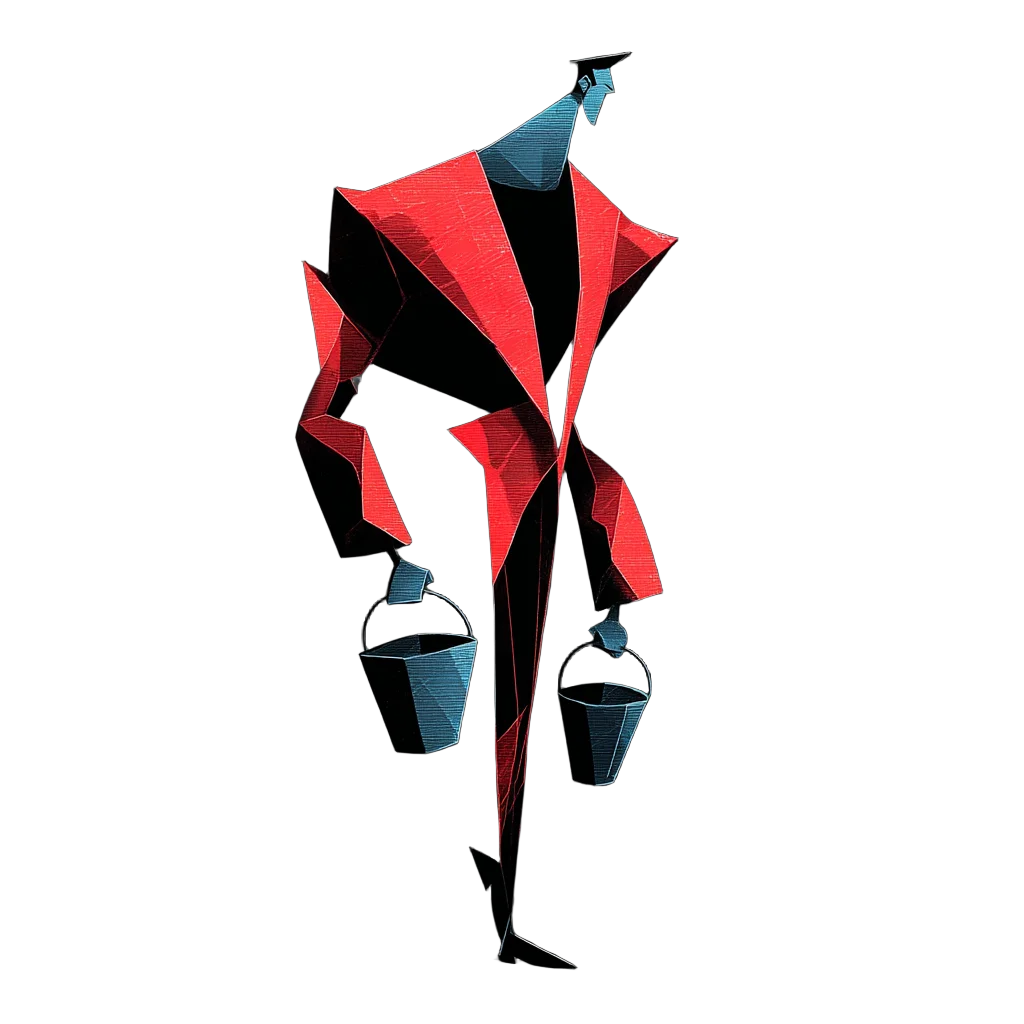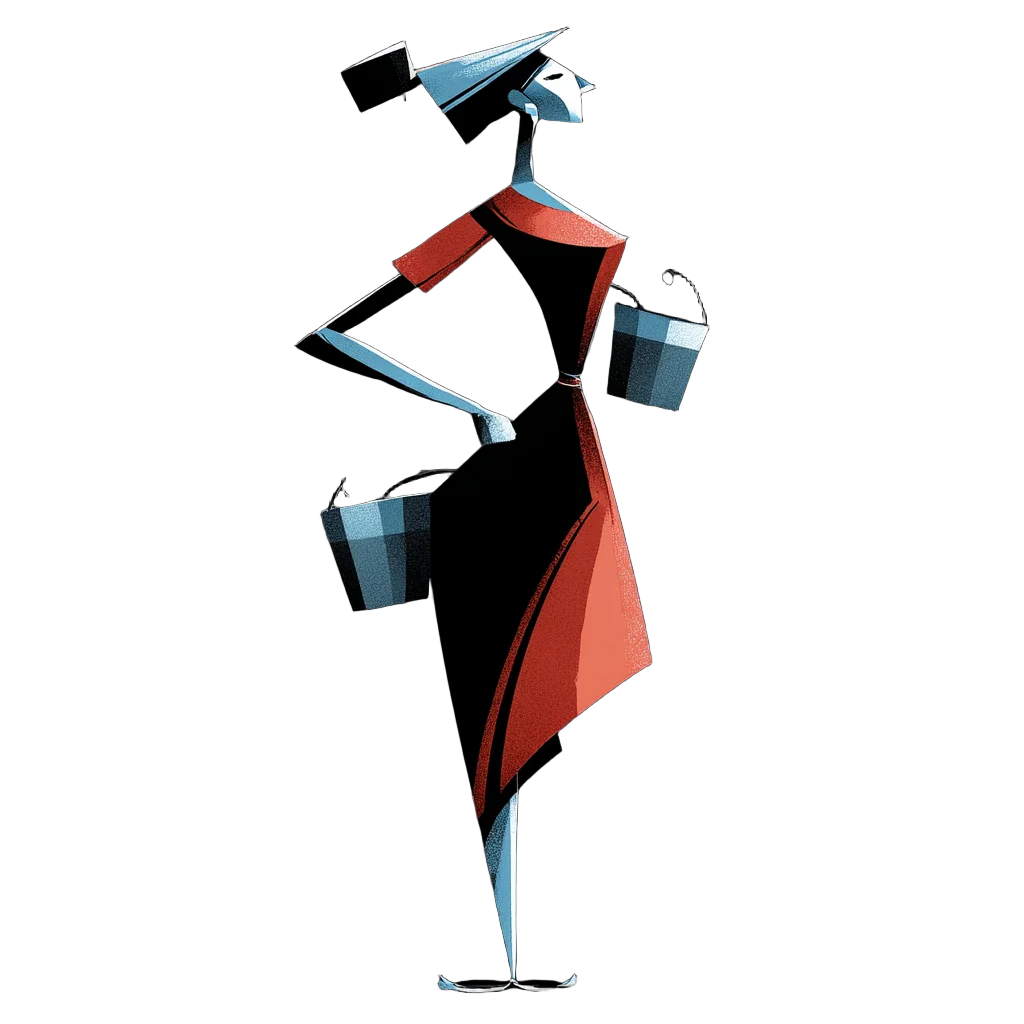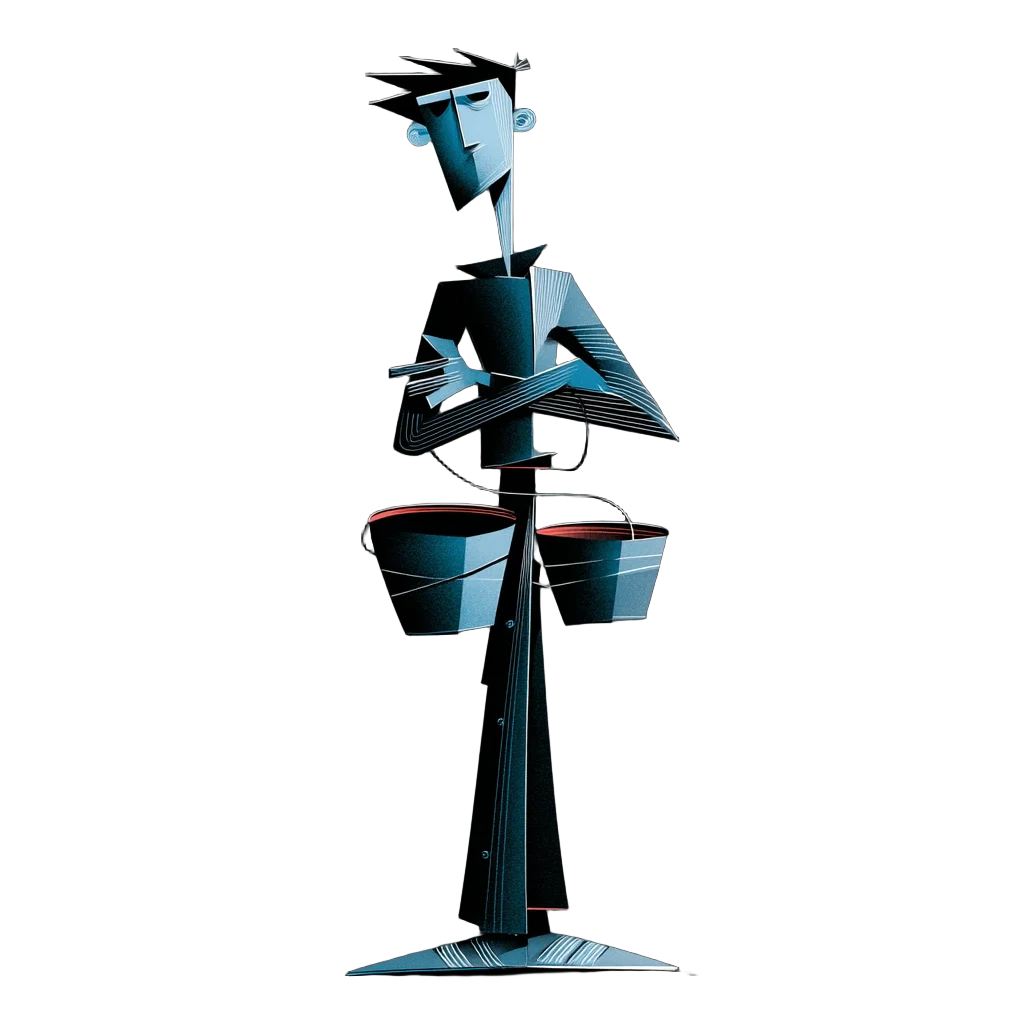
Aquarius
Birth period
From January 20 to February 18
Strengths
Detached analytical capacity, systemic vision, originality of thought, humanitarian orientation, intellectual independence, capacity to abstract from emotional pressure and operate on principle.
Quality
Fixed
Weaknesses
Emotional aloofness, doctrinal rigidity disguised as open-mindedness, contrarianism for its own sake, difficulty translating ideals into intimate behavior, periodic detachment from bodily and feeling life.
Stones
Amethyst, aquamarine, garnet, labradorite, hematite.
Planets
Saturn (classical ruler), Uranus (modern ruler).
Element
Air
Color
Electric blue, indigo, silver-grey.
Personal relationships
The dual rulership of Saturn and Uranus governs the relational field across the entire lifetime. Saturn, exalted in Libra and dignified in the Aquarian decanate, imposes structural loyalty: bonds are kept because they have been formally recognized, not because of fluctuating affect. Uranus, however, conjuncts the relational axis through transit cycles roughly every seven years, producing periodic disruptions in the seventh house of partnership. Because Aquarius is a Fixed Air sign, the seventh-house cusp tends toward Leo - the polarity axis Aquarius–Leo - so partnerships are tested against the demand for personal recognition. Expect, lifelong, a pattern of long plateaus (Saturnian) punctuated by sudden reorganizations (Uranian); friends frequently become partners and partners frequently revert to friends, because the eleventh-house signature dissolves the categorical boundary the seventh house tries to enforce.
Love
Venus traverses Aquarius in detriment-adjacent territory: she is not technically debilitated here, but she operates against the grain of the sign's airy detachment, producing love that is conceptual before it is sensual. Because Venus in an Aquarian chart typically forms a sextile to a Sagittarian or Aries placement and a square to Taurus or Scorpio bodies, the lifetime love narrative oscillates between expansive idealization and confrontation with embodied desire. The native loves through ideas, projects, and shared causes; eros enters through the intellect. When transiting Uranus squares the natal Venus - an aspect that recurs roughly every twenty-one years - relationships either crystallize into permanence or dissolve overnight, with no middle resolution permitted by the square.
Creativity
Uranus in the fifth house by derivation (the fifth from Aquarius being Gemini-ruled in the natural zodiac when measured from the Aquarian ascendant common to many natives) governs the creative output. Because Uranus rules invention, electricity, and discontinuous insight, the Aquarian creative process is non-linear: long fallow periods are followed by compressed bursts of production. A trine from natal Mercury to Uranus, statistically common in Aquarian charts due to Mercury's frequent proximity to the Sun, produces the characteristic pattern wherein verbal and conceptual faculties feed directly into formal innovation. Creativity here is not decorative; it is structural, and it tends toward the diagrammatic, the systemic, and the future-oriented.
Communication
Mercury in Aquarius - a placement many natives carry due to Mercury's orbital tether to the Sun - is considered exalted by some Hellenistic readings because the sign's cool air supports analytical detachment. Communication therefore proceeds by abstraction: the native states the principle, then descends to the example. Because Saturn co-rules the sign, speech is structured, often aphoristic, and impatient with redundancy. The square that frequently forms between Mercury in Aquarius and a Taurus or Scorpio Mars produces, across the lifetime, the recurring difficulty of translating clean concept into emotionally legible speech. Expect to be accused of coldness when you intended precision.
Work
Saturn, the classical ruler, governs vocation across the lifetime via the tenth house. Because Saturn in Aquarius operates in its own domicile (by traditional rulership), career develops slowly, structurally, and cumulatively - there is no shortcut, and any attempt to take one is corrected by Saturnian return phases at ages 29–30 and 58–59. Uranus contributes the disruptive vector: roughly every seven years, transiting Uranus forms a hard aspect to natal Saturn, forcing a reorganization of professional structure. The lifetime arc therefore resembles a staircase rather than a ramp: long stable treads, sudden vertical risers. Work suited to the chart involves systems, networks, research, technology, reform institutions, and any field where individual labor compounds into structural change.
Luck
Jupiter, though not a ruler of Aquarius, governs the fortune axis through its transits across the natal chart. Because Jupiter completes a full zodiacal circuit every 11.86 years, the Aquarian native experiences a Jupiter return slightly before each twelve-year mark, and these returns reliably mark expansions of the social and intellectual network rather than financial windfalls per se. Luck for Aquarius is mediated through the eleventh house - the house Aquarius naturally co-signifies - meaning fortune arrives via groups, alliances, and collective projects, almost never through isolated individual effort. The trine from transiting Jupiter to natal Uranus, occurring several times in a lifetime, marks the periods of greatest opportunity: these are the windows in which the native should act, because the synthesis of expansion (Jupiter) and innovation (Uranus) is precisely the engine the chart is built to exploit.