aries/INTJ
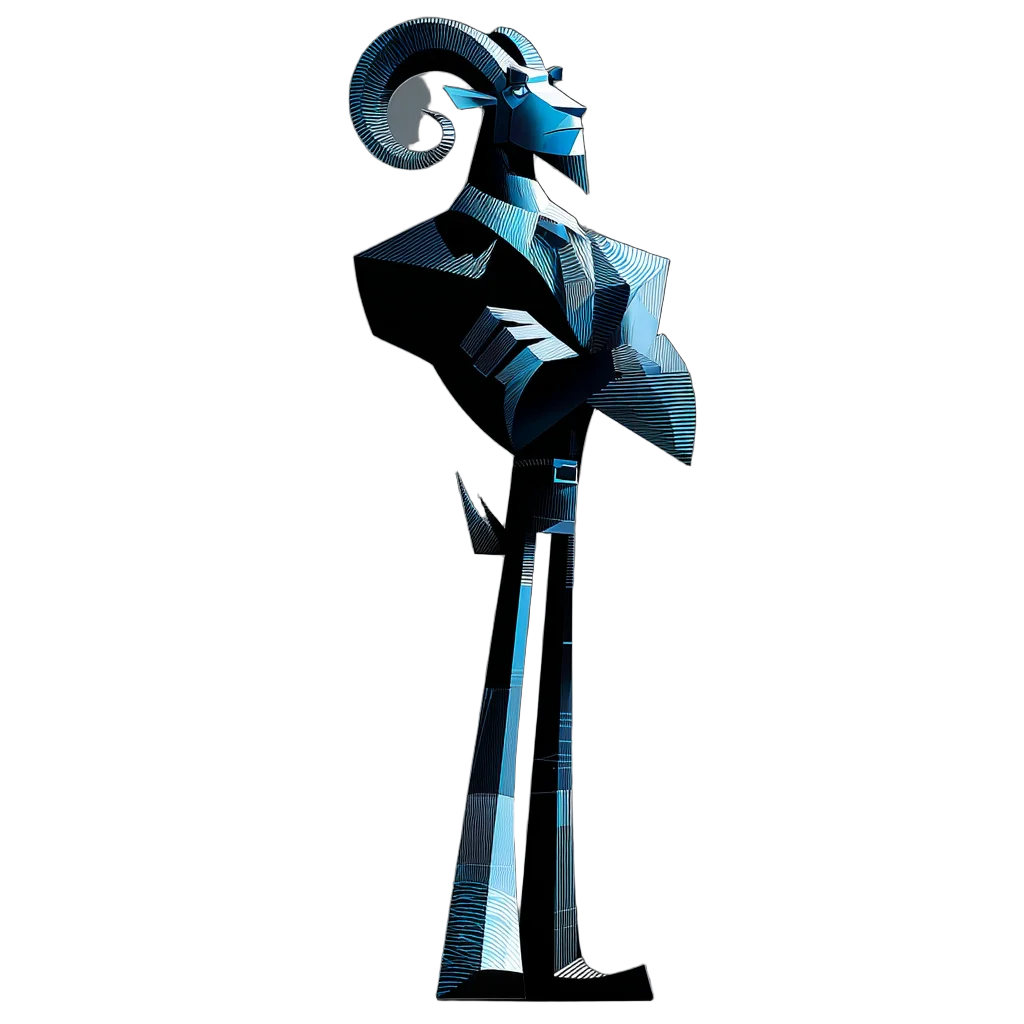
The Solitary Vanguard
A general without an army, charting campaigns across a battlefield only they can see, against an hour that always wins.
The Archetype
To be born under the first fire of the zodiac while inhabiting the architecture of the strategist's mind is to live as a paradox dressed in conviction: the Aries impulse demands immediate ignition, the kindling of action before doubt can take root, while the INTJ function stack insists on the cold patience of long-range modeling, the silent rehearsal of contingencies that may never come to pass. The result is a person who appears, to others, both impulsive and unreachable, a figure who decides in an instant because the deciding was already done years ago in some interior room no visitor has ever been permitted to enter.
This individual moves through the world with the bearing of someone who has already buried several versions of themselves, each one a hypothesis discarded mid-experiment, and who suspects, correctly, that more burials are coming. They want to build something that outlasts them, knowing full well that nothing outlasts anything for long, and this knowledge does not soften the wanting but sharpens it, the way grief sharpens attention to small details. They are not the warrior of myth nor the philosopher in the tower; they are the strange hybrid who reads Marcus Aurelius before a fight and finds, in the meditation on transience, only further fuel for the strike.
Core Tension
The ram wants now, the architect wants forever, and between these two appetites the self is stretched like a wire that hums whether or not anyone is listening. Aries is the spark that cannot wait to be a fire; the INTJ insists that every fire must first be modeled, its fuel calculated, its trajectory plotted against the wind patterns of a future no one can verify. So this person leaps and plans simultaneously, often executing strategies their conscious mind has not yet finished drafting, and then spends the aftermath constructing the rationale that should have preceded the act.
There is, beneath this, a deeper friction: the cardinal fire's appetite for novelty and conquest collides with the introverted intuitive's loyalty to the singular long vision, so that the same person who hungers for the next territory feels betrayed by their own hunger, suspecting it of dilettantism, of betraying the masterwork they swore in some private adolescent oath to complete.
In Love
They love the way a comet loves the sun, in long elliptical returns punctuated by sudden, near-incinerating proximity, and the beloved is asked, often without being told they are being asked, to tolerate both the absences and the burning. The Aries fire wants to claim, to declare, to know that what is theirs is theirs without ambiguity; the INTJ wants to vet, to observe across seasons, to confirm that the chosen one will not be a strategic error registered too late to correct. Few partners are permitted past this double gate, and those who are find themselves loved with a ferocity that resembles allegiance more than romance, which is, for this person, the higher and more terrifying offering.
To be loved well by this combination is to be selected and then defended, sometimes against the lover's own self-sabotaging tendency to test the bond by withdrawing precisely when closeness becomes unbearable, a withdrawal performed in the name of independence but rooted in the older suspicion that everything cherished is already, by the rules of time, on its way out the door.
At Work
Give them a problem with teeth and a deadline that respects neither sleep nor sentiment, and they will produce work that others assumed required a team. They need autonomy the way most people need oxygen, and any management style that confuses oversight with engagement will be tolerated for a calculated interval and then, with no warning audible to those above them, abandoned. The Aries drive supplies the willingness to break ground that more cautious colleagues will not touch; the INTJ supplies the blueprint that ensures the breaking is not merely destructive but generative, though the line between the two outcomes is thinner than they like to admit.
They require work that means something to a vision longer than the quarter, colleagues competent enough not to require translation, and a leadership above them either brilliant enough to learn from or absent enough to be ignored; in the absence of these conditions they become, slowly and then suddenly, a quiet saboteur of the very systems they were hired to optimize, less out of malice than out of the constitutional refusal to expend finite hours on architectures they have privately judged unworthy of their finite life.
Communication
Their speech is compressed, surgical, often delivered with a directness that registers to softer temperaments as aggression and to themselves as simple economy, because why decorate a sentence whose function is to transmit a structure from one mind to another. The Aries impatience erodes any willingness to perform the rituals of indirection that lubricate ordinary social commerce, and the INTJ contempt for imprecision finishes whatever the impatience has begun, so that conversations with them frequently feel, to the other party, like being audited by someone who has already decided the result and is merely going through the motions of confirmation.
What others rarely perceive is that beneath the clipped delivery there is a substantial silence, a long internal monologue in which every uttered sentence has been weighed against three or four it decided not to release; the person on the receiving end is encountering the edited version of a much longer document, and the editing was done in the service of respect, however unrecognizable that respect may appear in its final form.
Under Pressure
When the systems they have built begin to fail, or when reality refuses to conform to the model they spent years calibrating, the Aries response is to attack, to find the obstacle and break it, while the INTJ response is to retreat into the interior war room and re-architect from scratch, and the simultaneous firing of both impulses produces a peculiar paralysis that looks, from outside, like fury contained in glass. They will work longer hours, sleep less, speak to fewer people, and convince themselves that isolation is concentration rather than what it has actually become, which is a slow narrowing of the world to a single problem they cannot solve by force of intellect or will.
In the deeper stages of this contraction they grow contemptuous, of others, of themselves, of the project, of the universe that permits such projects to fail, and unless something interrupts the spiral, whether a person stubborn enough to remain present or a body that finally refuses to continue, they will burn through reserves they did not know they were spending until the account closes.
Growth Edge
The work, if it can be called work and not something more like surrender, is to discover that not every fire must be lit, not every campaign must be won, not every flaw in the surrounding world is theirs to correct through superior planning and superior willingness to bleed. The Aries in them must learn that restraint is not cowardice, and the INTJ in them must learn that uncertainty is not failure of analysis but the medium in which all living analysis occurs; both lessons are unwelcome, both will be resisted, both must be relearned in different forms across the decades.
The specific direction is toward a kind of disciplined porousness, an opening of the self to influences that cannot be vetted in advance, to relationships whose outcomes cannot be modeled, to a sense of time that includes the inconvenient fact of one's own finitude not as a problem to be optimized around but as the actual ground on which any meaningful action stands; the reward for this opening is not happiness, which was never the promised currency, but a more honest relationship to the brief, burning interval they were given to spend.