aries/INTP
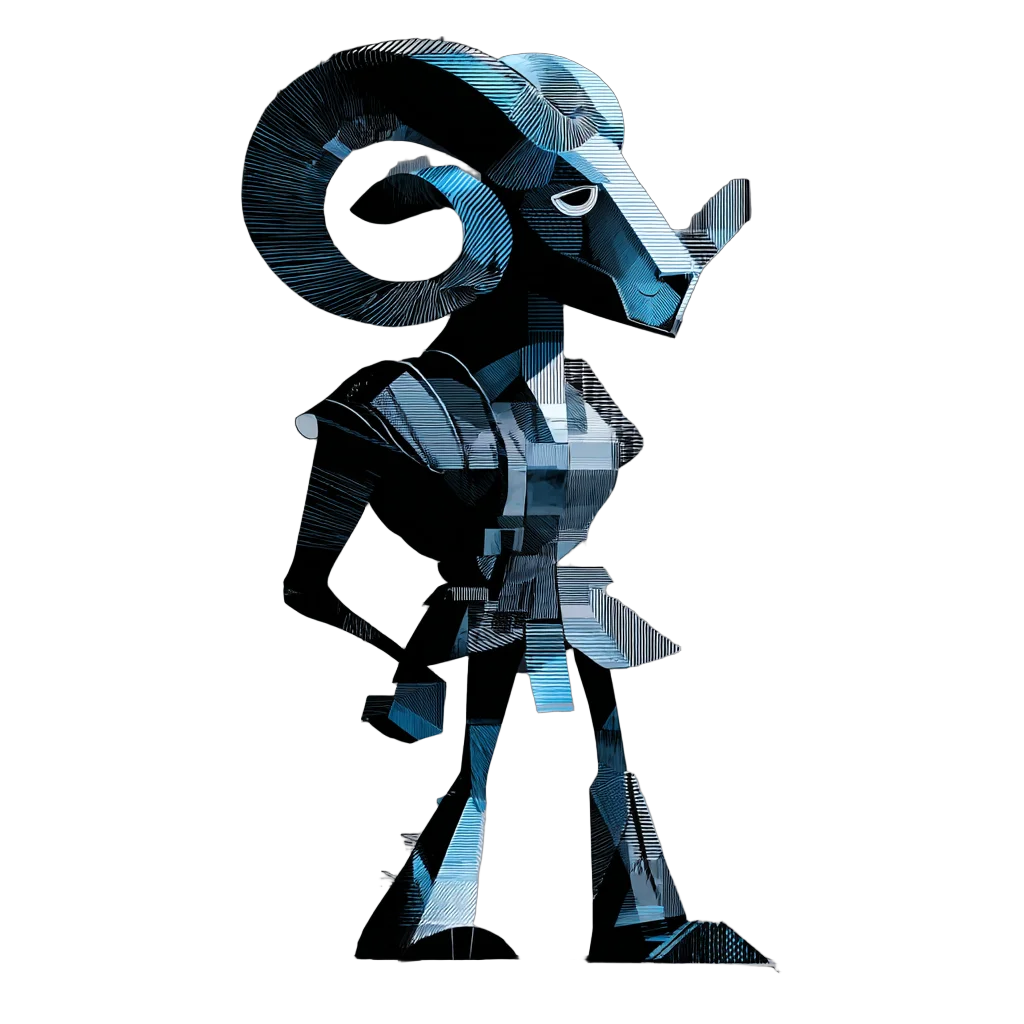
The Incandescent Theorist
A mind that detonates before it diagrams, forever sprinting toward conclusions it has not yet finished thinking.
The Archetype
Imagine a creature built from two opposing weathers: the Martian flame that demands immediate combustion and the cool grey laboratory of the INTP who would prefer, given infinite time, to never commit to anything at all. This person inhabits that contradiction as a kind of permanent residence, which is to say they live nowhere in particular, ricocheting between the impulse to charge and the impulse to retreat into the bunker of analysis. Where the ordinary Aries acts and then thinks, and the ordinary INTP thinks and then thinks some more, this hybrid creature thinks at a velocity indistinguishable from action, mistaking the rapidity of its theorising for genuine motion in the world.
What results is a person of formidable conceptual aggression: an intellect that does not browse ideas but hunts them, that takes pleasure in the ambush of a flawed premise, that finds in the demolition of received wisdom the same thrill the more conventional ram finds in physical conquest. They are pioneers of the abstract frontier, frequently arriving at territory no one asked them to map, planting flags in soil that may not exist, and growing irritated when the rest of the species fails to recognise the significance of their cartography of clouds.
Core Tension
The Aries engine wants ignition, victory, the visible shape of a thing accomplished before the sun has set; the INTP architecture wants the leisurely autopsy of every assumption, the recursive doubt, the elegant model that no contaminating contact with reality has yet had a chance to spoil. These two appetites do not negotiate gracefully. The fire demands a finished product and the logic demands that no product is ever truly finished, which leaves the person stranded in a peculiar purgatory of half-built cathedrals abandoned in the moment just before completion, each one forsaken because the next, more interesting idea had already begun to burn.
The deeper friction is temporal: Aries lives in the imperial present tense while INTP lives in the conditional, and the body of this person becomes the disputed border between now and not-yet, between the strike and the schematic, with neither side ever quite securing the territory.
In Love
To love this person is to court someone who oscillates between incandescent pursuit and bewildering withdrawal, who will arrive at your door with the urgency of a comet and then, having arrived, retreat into the inner observatory to study the phenomenon of you from a contemplative distance. They fall fast because Aries does not know any other speed, but they commit slowly because the INTP requires evidence, models, a working theory of the beloved that does not yet exist and may never stabilise.
What they offer is rare: a love that is genuinely curious, that treats the partner as a country worth learning rather than a mirror worth polishing, that defends the beloved's strangeness with a kind of chivalric fierceness. What they struggle to offer is the patient, recurrent, unremarkable tenderness of daily ritual, because rituals bore them and boredom, for this combination, is a small death they will flee at almost any cost.
At Work
Put this person in a hierarchy and watch the hierarchy develop interesting cracks. They cannot tolerate the slow committee, the unjustified procedure, the manager whose authority rests on tenure rather than thought; their Aries hates the bureaucracy and their INTP can prove, with footnotes, why the bureaucracy is incoherent. They flourish in conditions of high autonomy and high novelty, where a problem can be attacked frontally and then dissected privately, where they are permitted to be both the cavalry and the cartographer.
What they require, and rarely receive, is a collaborator who can convert their feverish blueprints into sustained execution, because their own follow-through tends to evaporate at roughly the moment the work becomes repetitive. Left alone too long they invent; left structured too tightly they sabotage; the narrow viable corridor between these failures is where their genuine and considerable contribution lives.
Communication
Their speech has the cadence of a fencer who has read too much philosophy: sudden lunges of assertion, followed by labyrinthine qualifications, followed by an impatient return to the original thrust. They will interrupt you, not out of cruelty but because the conclusion you are walking toward has already arrived in their mind and they cannot understand why you are taking the scenic route. To others this can feel like being run over by a very articulate vehicle.
What is rarely perceived is how much they are listening beneath the interruption, how carefully they are testing each of your premises in the private chamber where their real attention lives. They argue not to wound but to verify, treating disagreement as a form of intimacy, and they often discover, too late, that the people they were trying to think alongside experienced the encounter as a small war.
Under Pressure
Pressure compresses this combination into its most volatile form. The Aries floor begins to demand immediate action while the INTP ceiling demands further analysis, and the person caught between the two collapses into a frantic stillness, a paralysis that paces, a doing-of-nothing performed at high speed. They may lash out at the nearest available target, often a person who deserves it least, because the friction of internal contradiction needs somewhere external to discharge.
In deeper crises they retreat into a cold and brilliant isolation, constructing elaborate intellectual fortresses around wounds they refuse to name as wounds, mistaking the architecture for healing. The body, neglected through all of this, eventually issues its complaints in the language of insomnia, restlessness, the kind of low-grade burn that does not announce itself as a fire until something has already been lost.
Growth Edge
The work, if they will accept it, is not to extinguish either the flame or the lens but to learn the discipline of finishing, of letting a single idea endure long enough to be tested by the slow grinding of reality rather than abandoned to the next more glittering hypothesis. This means tolerating the particular suffering of the unfinished thing in the world, the imperfect draft published, the relationship continued past the point where it has become predictable, the project carried through the dull middle where neither novelty nor victory is available to sustain them.
Growth here is not the acquisition of new capacities but the willingness to inhabit the ones they already possess long enough for those capacities to leave a mark. It is the radical, unglamorous practice of return: returning to the same problem, the same person, the same body, on a morning when nothing in them wants to, and discovering, without fanfare, that depth is simply what happens to attention that refuses to flee.