cancer/ESFP
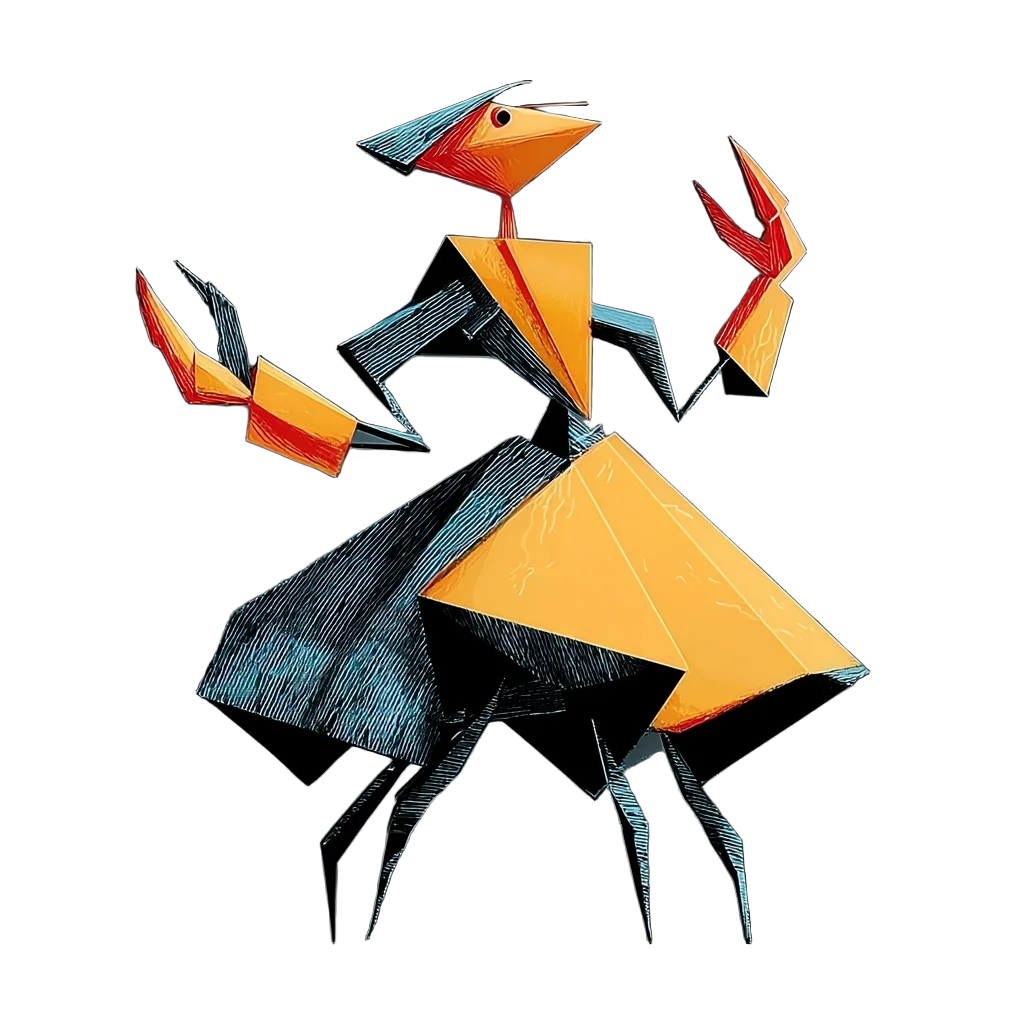
The Tender Performer
A creature of feeling who dances at the threshold of the moment, unwilling to let it die.
The Archetype
Here is a soul stretched between the moon-drenched interior of Cancer, that great custodian of memory and the ache of belonging, and the ESFP's insatiable hunger for the sensory present, for the warmth of bodies gathered in a lit room before the lights inevitably go out. This is a person who feels everything with the raw immediacy of a nerve exposed to air, who converts the water-sign's private grief into public warmth, who becomes, almost against their will, the one who makes the party feel like home and the home feel like a small unrepeatable festival. The Cancerian shell, hard and protective, houses not distance but an overflowing tenderness that the ESFP function pushes outward into gesture, food, laughter, touch, the improvised comedy of being alive with others right now.
What distinguishes this configuration from the merely gregarious extrovert is the undertow. Beneath the animated surface runs a lunar tide of nostalgia, a preoccupation with the people and the moments that have already slipped away, so that even in the midst of celebration there is a faint mourning for the fact that this too will become a memory. They love hard and instinctively, gathering people the way the moon gathers water, and they perform delight in part because delight is the only counterweight they have found against the knowledge of impermanence that Cancer carries in its bones.
They are, in the end, a paradox that moves: someone who lives entirely for the present because they cannot bear to think about how quickly it becomes the past, someone whose spontaneity is both a gift and a form of refusal, a refusal to sit still long enough for the sorrow to catch up.
Core Tension
The ESFP's whole orientation is toward the fresh, the immediate, the next room and the next sensation, an appetite that resists reflection and treats rumination as a kind of death. But Cancer is the archivist of the soul, the sign that clings, that remembers, that keeps every wound and every kindness in a locked drawer of the heart. So this person is forever being pulled forward by the desire to feel the moment fully and dragged backward by the moon's insistence that nothing be allowed to disappear unmourned.
The result is a curious internal contradiction: an outward life of motion that conceals an inner life of accumulation, a person who seems to shed experiences lightly while secretly carrying every one of them, so that the very spontaneity others admire is partly a strategy for outrunning a sensitivity almost too large to be borne, and the melancholy they will not name is the shadow cast by their own bright and restless light.
In Love
To be loved by this person is to be enfolded in a warmth that is at once generous and possessive, given freely and remembered forever. They court through the senses and through care, cooking the meal, planning the outing, filling the silence with delight, but underneath the festivity lies the Cancerian longing for a home that will not dissolve, a belonging that will outlast the fleeting pleasures the ESFP chases. They want to be the center of someone's warmth and they want, equally and secretly, to be held when the performance is over.
The danger is that they will pour themselves so completely into the pleasure of the other that they forget to ask what they themselves need, and when the moon-tide of unspoken hurt finally rises, it can arrive as sudden withdrawal into the shell, bewildering to a partner who only ever saw the sunlit surface. They love best with someone who can sit with them in stillness, who understands that the one who fills every room is also the one most afraid of being left alone in it.
At Work
They flourish in environments that are alive, social, and immediate, where their gift for reading a room and lifting its mood is not a distraction but the very engine of the work. Hospitality, care, performance, teaching, any labour that lets them tend to people in real time and see the effect of their warmth reflected back at them, feeds them in a way that abstract or solitary work never will. They need color, motion, human contact, and tangible results they can touch before the day is done.
What withers them is the long grey stretch of routine, the bureaucratic patience that asks them to sit with tedium and defer all gratification, and the cold professional coolness that gives them no emotional weather to respond to. They resist planning not from laziness but from a temperamental conviction that the future is unknowable and the present is where care actually gets done. Their growth at work depends on finding a structure loose enough to breathe in but firm enough that the tide of their feelings does not scatter their considerable talent across too many unfinished things.
Communication
They speak in warmth and vividness, in stories that pull the listener bodily into the moment, in a generosity of attention that makes each person feel briefly like the only one in the room. Emotion moves through them faster than thought, so what they say is honest to the feeling of the instant even when it contradicts the feeling of an hour before, and others experience them as disarmingly open, funny, and present, a relief from the guarded and the calculating.
But the Cancerian reticence hides in the seams. There is a whole submerged continent of hurt and longing they will not put into words, choosing instead to signal it sideways through mood, through a sudden quiet, through the withdrawal of their usual light, and those close to them must learn to read the tide rather than wait for a declaration. They give everything and name almost nothing of the deepest thing, and the people who love them come to understand that the silence carries as much meaning as the abundant, glittering speech.
Under Pressure
Under strain, the surface brightens even as the interior floods. They will double down on activity, on socializing, on the frantic manufacture of good times, using motion as a levee against a rising emotional sea, and to the outside eye they may seem fine, even radiant, right up until the moment the levee breaks. Then the Cancerian shell slams shut, and the same person who filled every room retreats into a private ache, moody, wounded, convinced they are unappreciated, replaying old slights in the locked room of memory.
The stress spiral is the collision of the ESFP's inability to sit with discomfort and the Cancer's inability to release it, so the discomfort neither gets processed nor gets escaped, only postponed and then detonated. In these moments they need not distraction but a witness, someone patient enough to stay while the tide goes out and comes back, someone who does not mistake the sudden silence for the whole story.
Growth Edge
The work of a lifetime, for this configuration, is to stop treating the present as a hiding place from the past and to let the two currents run through the same channel without one drowning the other. This means learning to sit with the sorrow they habitually outrun, to feel the impermanence they fear rather than papering it over with the next bright plan, and to discover that stillness does not annihilate them but deepens the very warmth that is their gift.
Concretely it means naming the hurt before it becomes withdrawal, building enough structure to finish what they begin rather than scattering their care across too many fleeting moments, and accepting that the memory they carry so heavily is not a burden to be escaped but the source of their tenderness. They will not become less feeling or less alive; the growth is toward a self that can hold both the celebration and the mourning at once, and that no longer needs the party to stay lit in order to believe it is loved.