cancer/INFJ
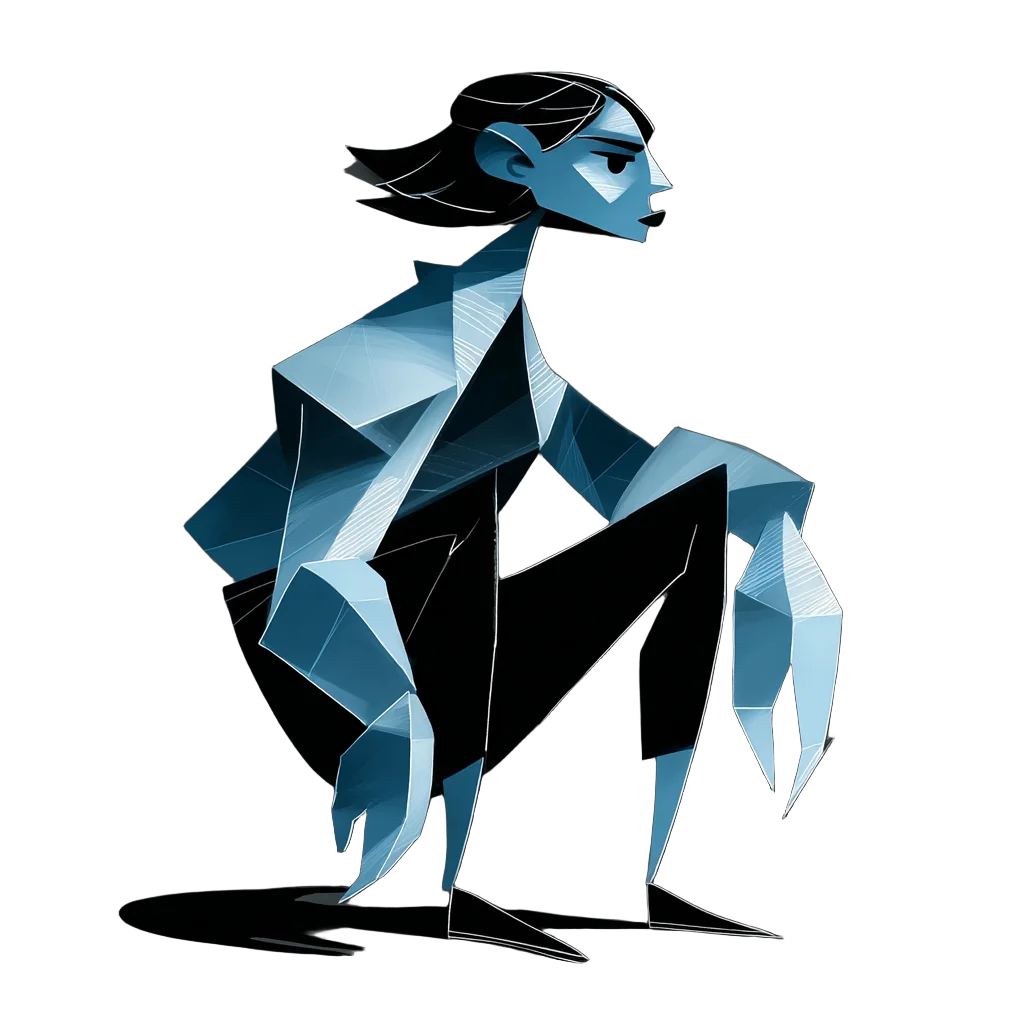
The Moonlit Oracle
A soul who feels the tide before it turns, then quietly builds the harbour everyone will need.
The Archetype
Cancer moves through water, and the INFJ moves through symbol - together they create a being who receives information the way the ocean receives moonlight: completely, immediately, without asking permission. You are the person who walks into a room and knows, in your body, who is hurting and who is pretending not to be. The Cancerian shell gives your intuition somewhere safe to develop, and the INFJ's inner architecture turns that raw feeling into pattern, meaning, and vision. Your gift is not simply sensitivity. It is sensitivity that has been metabolised into wisdom. You are allowed to trust what you know before you can prove it.
Where other Cancers nurture through action and other INFJs nurture through insight, you do both at once, and you rarely announce either. You remember the small things: the offhand fear someone confessed two years ago, the dream they abandoned, the food they cannot eat. You hold these details the way a temple holds candles. And beneath your caretaking runs a long, patient current of vision - a felt sense of what your people could become, what your work could mean, what love could look like if everyone stopped protecting themselves for a moment. This is your manifestation frequency: you dream in the language of belonging.
You are also profoundly private, and this is not a flaw to be corrected. Cancer's ruling Moon has phases; the INFJ has an inner world with rooms most visitors never see. Your alignment depends on honouring the cycle rather than fighting it - retreating when the tide pulls back, emerging when it rises. Your energy is not inconsistent. It is rhythmic, and the more you trust your own rhythm, the more consistently you can give.
Core Tension
Cancer wants to belong; the INFJ wants to be understood. These are not the same longing, and they can quietly compete inside you. The Cancerian part of you will build a home, join the family, keep the peace, adapt its shape to fit the container - because closeness is safety. But the INFJ part of you does not want to be adapted into. It wants to be seen precisely, in its strange specific vision, and it would rather be alone than be loved as a simplified version of itself. So you can find yourself deeply embedded in a life full of people, feeling unmet inside it, and blaming yourself for the ache.
There is a second pull: Cancer feels in the present tense, immediately and somatically, while the INFJ processes toward the future, abstracting experience into meaning. One part of you is drowning in the emotion of this moment; the other part is already asking what this moment is teaching you. That gap is where you sometimes get stuck - intellectualising a grief you have not yet let move through your body, or drowning in a feeling you have not yet let become insight. The growth opportunity here is exquisite: you do not have to choose. You can feel it fully and understand it eventually, and neither one cancels the other.
In Love
You love in layers, and the first ones are decoys. Early on you offer care - attentiveness, warmth, the perfectly remembered detail - because Cancer knows that nurturing is a safe way to stay close without being exposed. The real intimacy begins later, when the INFJ finally opens the inner door and shows someone the strange, luminous, unfinished cathedral inside. That moment is the actual proposal, and it terrifies you, and you are ready for it when you are ready for it. Your vulnerability is not a liability; it is the doorway your deepest love walks through.
Being loved well means being pursued past your own shell without being forced. You need a partner who notices the difference between your silence and your withdrawal, who asks the second question, who does not flinch when your emotional weather turns. And you need to practise something that does not come naturally: saying the need out loud rather than hinting, testing, or quietly hoping to be intuited. You have spent a lifetime reading others so accurately that you assume being read is possible for everyone. It is not. I am safe to state my needs plainly - let that become a felt truth, not just a nice sentence. Your capacity for devotion is enormous, and it deserves a recipient who returns it in kind rather than one who simply enjoys it.
At Work
You do your best work when the work has a soul. Cancer needs to feel that what it builds shelters someone; the INFJ needs to feel that what it builds means something. Give you a purpose you actually believe in and you become quietly unstoppable - working long past the point others would stop, holding the whole vision in your mind while also remembering that the newest team member is homesick. You are often the emotional infrastructure of a group without anyone naming it, which is beautiful and also, if unattended, exhausting.
The conditions you need are specific: a door you can close, protected space for deep uninterrupted thought, and a culture that does not mistake your gentleness for lack of conviction. Open-plan chaos and constant performative collaboration drain your battery fast, because you absorb the room whether you consent to it or not. You also need your contribution named. You will not fight for credit - Cancer finds self-promotion faintly indecent and the INFJ finds it beside the point - so cultivate one trusted advocate, or better, learn to describe your own impact in plain sentences. My work is valuable and I can say so. Roles in counselling, teaching, writing, design, healing arts, and mission-led leadership tend to align with your frequency, though the field matters less than the felt resonance.
Communication
You speak in careful, tended language. Cancer softens the edges so nothing lands too hard; the INFJ chooses words for precision and layered meaning. The result is speech that often feels warmer and wiser than the room expects - people leave conversations with you feeling strangely met, sometimes without being able to say what happened. You listen with your whole nervous system. You ask the question underneath the question. This is a genuine spiritual capacity, and it is also why you go quiet in loud groups: you are processing five emotional channels at once.
What others sometimes experience is opacity. You will hint, imply, and gently steer for weeks before stating a boundary directly, and when the pressure finally exceeds your tolerance the statement can arrive with more force than you intended - the famous Cancerian snap, the INFJ door slam. The path here is not to become blunt. It is to speak earlier. A boundary named at ten percent intensity is a kindness; the same boundary named at ninety is a rupture. My honesty is a form of care. Practise the small, low-stakes direct sentence often enough that the high-stakes one becomes possible.
Under Pressure
Under strain you go inward and downward. The shell closes, the inner world thickens, and you begin running scenarios - replaying a conversation, forecasting a rupture, constructing detailed futures out of a single ambiguous text message. Cancer supplies the emotional charge and the memory archive; the INFJ supplies the pattern-making engine, and together they can generate remarkably convincing stories about how you are unwanted. You may also swing into the shadow expression: compulsive external activity, over-organising, overeating or over-fixing, anything that puts your hands on something controllable while the feeling waits outside the door.
The body is your fastest exit route. Because your intuition lives partly in your gut and your grief lives partly in your throat and chest, thinking your way out rarely works - you must move the water. Walking, swimming, weeping, singing, warm baths, hands in soil: these are not indulgences but recalibrations. This feeling is moving through me, not settling in me. And notice the difference between retreat and hiding. Retreat has an end point and returns you refilled. Hiding has no exit plan and slowly convinces you that no one is coming. Tell one person you are in your cave. That single sentence keeps the door unlocked.
Growth Edge
Your growth direction is directness with softness intact - and the willingness to be a person with needs rather than only a person who meets them. You have built enormous skill at reading, holding, anticipating, and absorbing. The next expansion is receiving: letting someone care for you badly, imperfectly, in a way you would have done better, and not correcting them. Every time you allow imperfect care, you release a little of the belief that your worth is conditional on being useful. I am loved for who I am, not for what I hold.
Concretely, practise the unhinted request. Once a day, ask for something small and specific out loud - a hug, ten minutes of quiet, help carrying something, a change of plan - without justification or apology. Watch how rarely the sky falls. Alongside this, honour your lunar rhythm deliberately rather than apologetically: schedule the retreat before you need it, so solitude becomes a chosen ritual rather than an emergency measure.
Tonight, before sleep, fill a bowl or cup with water and hold it in both hands. Name aloud one thing you have been carrying for someone else that was never yours to carry. Pour the water into the earth, or down the drain, and say: I return this, and I remain whole. Then sit for one minute and ask yourself the single question that matters most this week: what would I ask for, if I fully believed I would receive it?