gemini/ENTP
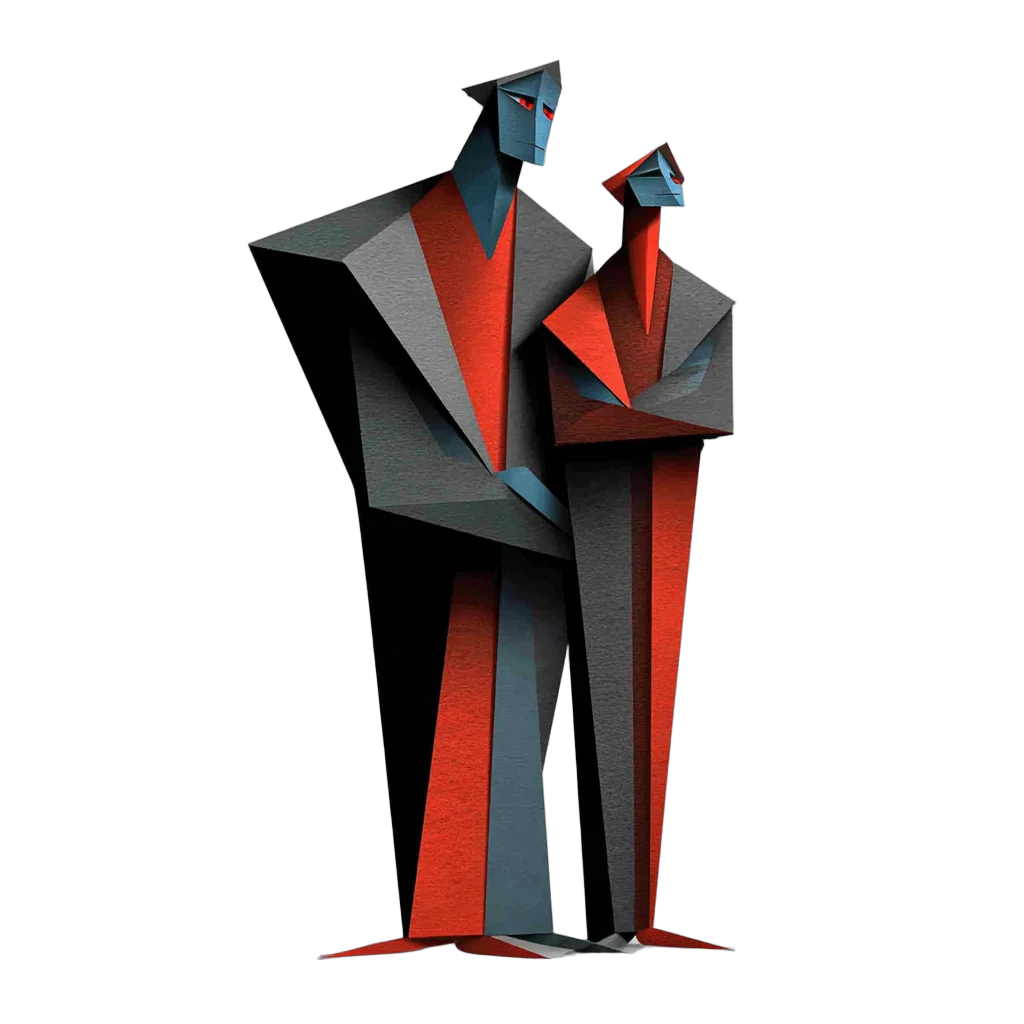
The Quicksilver Heretic
A mercurial mind doubled upon itself, conjuring possibilities faster than time can verify or memory can hold.
The Archetype
To be born under the sign of the Twins and to inhabit the cognitive architecture of the ENTP is to live as a kind of perpetual rehearsal, a being whose primary medium is the not-yet-decided, whose intelligence flickers across surfaces because surfaces, in their multiplicity, are more honest than the false depths offered by single conclusions. The Gemini current already fractures the self into observer and performer, witness and witnessed, and when this is compounded by the ENTP's extraverted intuition, which scatters attention across every adjacent possibility like seeds flung into wind, the result is a person who experiences thinking less as a tool than as a weather system, a climate of contradictions in which they are simultaneously the meteorologist and the storm.
Such a person tends to be charming in the way certain rooms are charming: full of doors, none of them quite closed. They argue for sport, not because they are insincere but because sincerity, to them, is a moving target, a thing best approximated by the friction of competing positions rubbed together until something briefly luminous appears. They are gifted with a verbal facility that can construct a worldview in an afternoon and dismantle it before supper, which makes them invaluable to any project that requires reframing and dangerous to any project that requires endurance.
Core Tension
The Gemini hunger for novelty and the ENTP appetite for conceptual provocation conspire against the slower work of becoming, that grinding sedimentation by which a life acquires the weight of meaning. Both systems privilege the possible over the actual, the question over the answer, the next conversation over the unfinished one, and so this person often finds themselves rich in beginnings and impoverished in middles, fluent in the grammar of potential but stammering when asked what, precisely, they have built.
There is also the quieter tension between the Geminian need to be witnessed in multiplicity, to be seen as the many things one is, and the ENTP's reflexive performance of detachment, the cool ironist's mask that protects the inner volatility from being read too easily. The cost is a chronic loneliness inside crowds, a suspicion that no observer ever quite catches the whole of them, partly because the whole, even to themselves, refuses to sit still long enough to be catalogued.
In Love
Love, for this combination, begins as a conversation that refuses to end, an intellectual seduction in which the beloved is first apprehended as a mind worth orbiting, a system of curiosities whose internal logic feels like new territory. They fall through their attention, and because their attention is restless, they require partners who can metabolise their many selves without demanding a final inventory, who understand that consistency, in this person, is a moving average rather than a fixed point.
To be loved by them is to be perpetually re-described, recast in fresh language, addressed as if you were a question they had not yet finished asking. The risk, of course, is that the question can be set down when a more interesting one arrives, and so what they must learn, painfully, is that fidelity is not the death of curiosity but its disciplined deepening, the willingness to find the inexhaustible inside the familiar rather than fleeing the familiar in search of the inexhaustible elsewhere.
At Work
This combination thrives in conditions of high ambiguity and low supervision, in the early stages of ventures when the map has not yet been drawn and the territory itself is being argued into existence. They are natural strategists, devil's advocates, founders of things that later require someone else to finish, and they tend to wither in environments that mistake repetition for rigor or that confuse process for progress. Give them a problem nobody has named yet and they will name it three times before lunch, each name slightly more useful than the last.
What they require, and rarely admit to requiring, is a structural counterweight, a collaborator or system that converts their proliferating ideas into shipped artifacts, because left unchecked their output remains a brilliant cloud of unrealised schematics. They do not need discipline imposed so much as scaffolding offered, an external architecture against which their generative chaos can become legible work rather than dissipated brilliance.
Communication
They speak in branches, in parentheticals, in qualifications that fold back on themselves, and the experience of being in dialogue with them is something like watching a chess player who has decided the board itself is negotiable. Words are not, for this person, vehicles for delivering pre-formed thought; words are the thinking, and they will frequently surprise themselves mid-sentence, discovering an argument by speaking it, abandoning it by hearing it aloud. Others find this exhilarating, then exhausting, then, eventually, difficult to trust, not because the speaker is deceitful but because the speaker is in motion and the listener wanted a place to stand.
What the audience often misses is the cost of this fluency, the way the constant verbal improvisation can become a substitute for the harder work of saying one true and unretractable thing. To communicate well, in the deeper sense, this person must occasionally accept the small death of choosing a single word and letting it be final, of foregoing the next clever reframe in favour of the unornamented sentence that costs them something to mean.
Under Pressure
Under stress, the lightness turns brittle. The wit sharpens into something that cuts without warming, the curiosity narrows into compulsive scanning, and the famous adaptability reveals its shadow as an inability to remain anywhere long enough to feel what is happening. They will start new projects in the middle of a crisis, pick fights about definitions, generate elaborate theoretical frameworks for why their distress is actually interesting, anything to keep the analytical machinery running so that the underlying weather of feeling cannot land.
When genuinely overwhelmed, this combination tends to vanish into abstraction or into novelty, disappearing into a new interest, a new person, a new city, treating the discontinuity of self as a feature rather than a wound. The body, neglected, eventually files its complaint, and the person discovers that the mind they trusted to outrun any difficulty has been carrying a tired animal all along, an animal that required, of all unfashionable things, rest and repetition and the dull medicine of staying put.
Growth Edge
The work, if it can be called work, is to make peace with depth without surrendering breadth, to learn that returning to the same question on a different day is not stagnation but a form of intimacy with reality that no amount of lateral motion can replicate. This means choosing, sometimes, the conversation already underway over the more glittering one across the room, the half-built thing over the freshly imagined one, the partner one has rather than the partner one might invent.
Growth here is not a matter of becoming less mercurial, which would be a kind of self-betrayal, but of learning that the quicksilver mind can be poured into containers that hold, that finishing something is not the death of possibility but its incarnation, and that a life made of beginnings, however brilliant each beginning may have been, leaves behind only the faint perfume of what was almost done. The invitation, neither cheerful nor easily accepted, is to stay.