libra/ESFJ
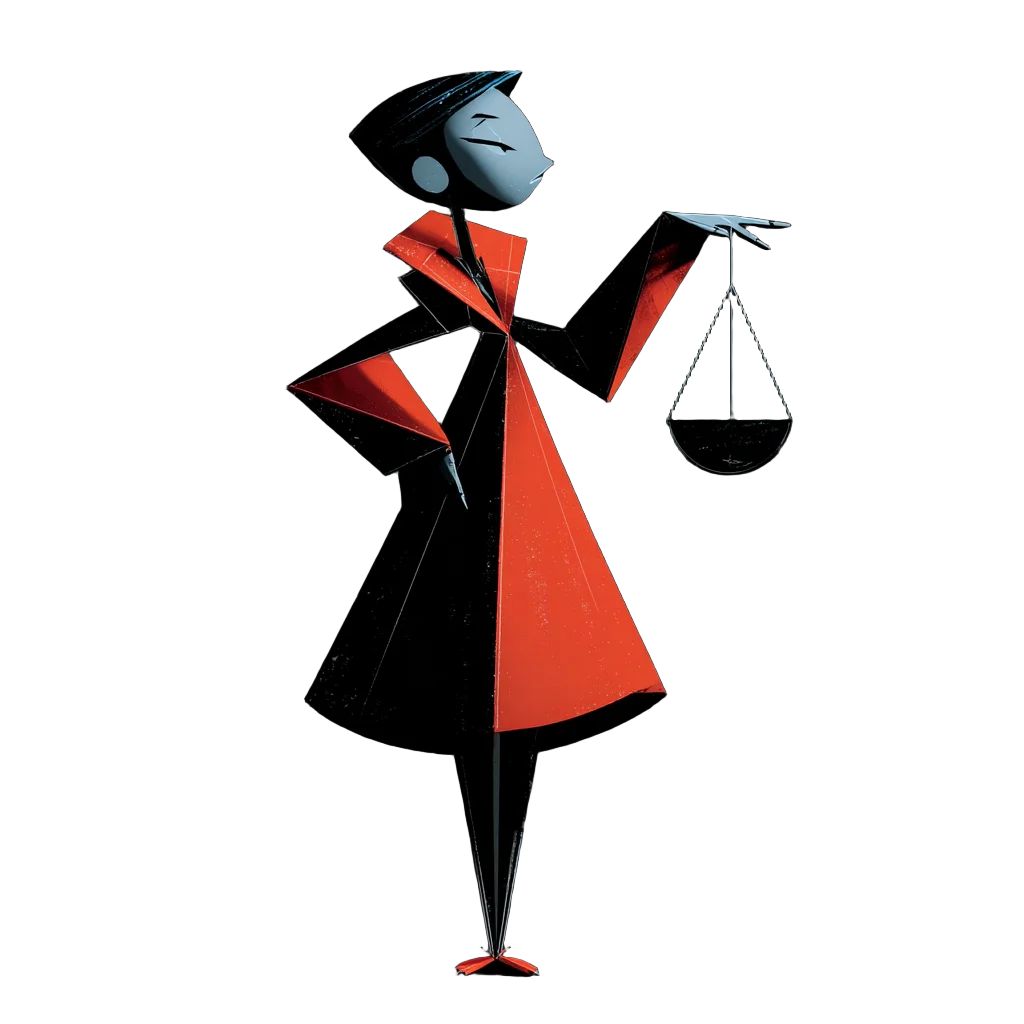
The Devoted Harmonizer
A keeper of the fragile peace who measures their own worth in the equilibrium of others, forever afraid the scales will tip when they look away.
The Archetype
Here is a soul organized around the terrible and beautiful conviction that belonging can be manufactured through care, that if the table is set correctly and every guest feels seen, the encroaching disorder of existence might, for one evening, be held at bay. The Libran instinct toward balance fuses seamlessly with the ESFJ's warm, tireless orientation toward the needs of the collective, producing a person who reads a room the way others read weather, who senses the smallest tremor of discomfort in a friend and moves, almost involuntarily, to correct it. This is not performance so much as vocation; the harmony of the group is not merely preferred, it is felt in the body as a kind of moral obligation.
What gives this combination its particular texture is the way Libra's aesthetic idealism, its longing for the just and the graceful, tempers the ESFJ's practical, present-tense devotion. This is someone who does not simply feed the hungry but arranges the plates, who does not merely remember your birthday but chooses the gift that says something true about who you are. They are custodians of ritual, of the small repeated gestures by which people convince themselves that relationships are permanent things rather than the shifting arrangements they in fact are.
And beneath the graciousness runs a quiet current of dread, the suspicion, rarely spoken, that all this warmth is a bulwark against a colder truth: that connection is provisional, that people leave, that the balance they labor so hard to maintain is a temporary agreement with entropy and nothing more. They know this, somewhere, which is precisely why they keep setting the table.
Core Tension
The fracture lies between Libra's need for fairness as an abstract principle and the ESFJ's need to be personally, concretely liked by the specific people in front of them. The scales demand impartial judgment, the weighing of one claim against another without favor; the feeling function demands loyalty, warmth, and the preservation of harmony at almost any cost. When these pull in opposite directions, this person is caught between the desire to render a just verdict and the desire to keep everyone at the table happy, and so they often defer, endlessly weighing, unwilling to be the one whose honesty ruptures the peace.
The result is a chronic difficulty with self-location. Both systems orient outward, toward the other, toward relationship, toward the maintenance of an external order, and so the question of what this person actually wants, stripped of the wants of everyone around them, becomes strangely unanswerable, a room they have furnished for guests but forgotten to inhabit themselves.
In Love
To be loved by this person is to be attended to with a thoroughness that can feel, at first, almost disorienting in its generosity. They remember what you said in passing, they anticipate the mood before you name it, they build a shared life out of small considerate acts that accumulate into something that looks a great deal like devotion because it is devotion. Libra's romantic idealism gives the relationship a sense of occasion, a wish for partnership as a kind of elegant symmetry, two people balanced against the disorder of the world.
The difficulty is that their love so thoroughly organizes itself around the beloved's needs that their own can go unvoiced for years, quietly accruing into a resentment they would be mortified to admit feeling. They fear conflict as a small death of the harmony they treasure, and so they smooth, accommodate, and defer, until one day the imbalance they have concealed even from themselves becomes impossible to carry. To love them well is to insist, gently and repeatedly, that they name what they want, and to make it safe for them to be, occasionally, ungracious.
At Work
In the workplace they are the connective tissue, the one who notices the overlooked colleague, who organizes the collective gesture, who translates between factions that have stopped speaking. They thrive in environments with clear structures and warm relationships, where the rules are fair and the people are known, and they bring to their tasks a conscientiousness that borders on the devotional. Libra's diplomatic instinct makes them natural mediators, capable of finding the arrangement that lets everyone save face.
What they require is appreciation that is visible and sincere, and a sense that the enterprise is fundamentally decent. They wilt under cynicism, under environments where relationships are treated as expendable, and they can struggle to make hard decisions that will disappoint people, deferring and consulting long past the point of usefulness. Their gift is cohesion; their trap is the belief that keeping everyone content is the same as doing the work well, when sometimes the work requires the willingness to be, briefly, the villain.
Communication
Their speech is warm, inclusive, carefully calibrated to the temperature of the room, forever seeking the phrasing that includes rather than excludes, that softens the edge of a hard fact into something the listener can receive without wound. They ask after you, they draw the quiet ones in, they find the common ground that lets a tense conversation continue. Libra's love of measured, courteous exchange combines with the ESFJ's genuine interest in people to produce a conversational presence that most experience as generous and safe.
The cost of this calibration is directness. They will often circle a difficult truth for so long that its urgency dissipates, or they will withhold a real opinion rather than risk the friction of disagreement, leaving others to wonder, eventually, what they actually think. Those closest to them learn that the most important things are frequently the ones left unsaid, buried beneath layers of accommodation, waiting for a directness that requires more courage than their instinct for harmony readily permits.
Under Pressure
Under strain, the outward-facing machinery accelerates rather than stops. They over-give, over-manage, over-apologize, throwing themselves harder into the care of others as a way of not feeling the vertigo of their own unmet needs. The Libran horror of imbalance manifests as an obsessive attention to how they are perceived, a replaying of small interactions in search of the moment they gave offense, and the ESFJ under stress can slide into a wounded, resentful sense of being unappreciated, of having poured out everything and received nothing back.
At the extreme, the accumulated deferrals surface as a startling flash of bitterness or self-pity that seems, to observers, to come from nowhere but has in fact been assembling silently for a very long time. The person who spent so long holding the balance discovers that the effort of concealment was itself the heaviest weight, and the collapse, when it comes, is the sound of scales they should have let tip long ago.
Growth Edge
The work here is the frightening one of turning the attention inward without treating that turn as a betrayal of everyone they love. It means learning that a stated preference is not an act of aggression, that disagreement does not dissolve a bond but often deepens it, and that the harmony purchased by chronic self-erasure is a counterfeit peace that leaves the real self unmet and eventually unknown, even to themselves. The scales cannot balance if one pan is always empty.
The deeper and less consoling task is to sit with the truth their whole temperament is built to avoid: that no amount of care can make connection permanent, that the disorder they hold at bay is not defeated but only postponed, and that this does not render the effort meaningless. To keep setting the table while knowing the guests will leave, to love without the guarantee of balance, to speak the honest thing even as it disturbs the peace they cherish, this is not the loss of their gift but its maturation into something braver and more real.