sagittarius/ENTJ
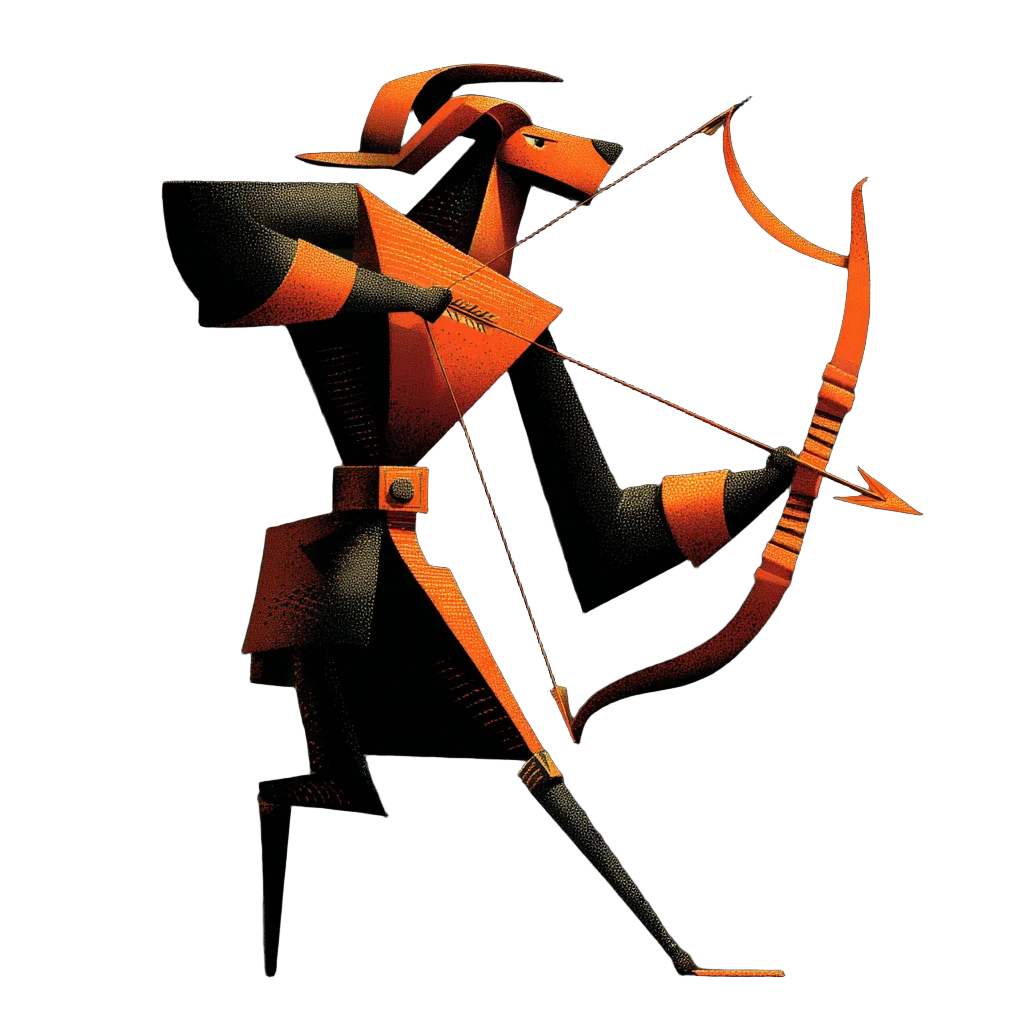
The Conquistador With a PowerPoint
Half explorer, half executive, fully convinced the map is wrong and they should redraw it before lunch.
The Archetype
Sagittarius supplies the restless hunger for horizons; ENTJ supplies the Gantt chart to colonise them. Together they produce a person who treats existence as a series of expeditions with quarterly milestones - someone who will book a one-way ticket to Lisbon and, by the layover, have already drafted a five-year plan for their as-yet-unconceived consulting firm. They are the friend who returns from a 'spiritual sabbatical' in Patagonia with three new business cards and a tan.
What distinguishes this particular hybrid is the unnerving sincerity of it all. They genuinely believe they can do everything, and the maddening part is they often can. Other people's ceilings strike them as architectural suggestions. They read biographies of Alexander the Great not as cautionary tales but as benchmarks, and find his early death faintly disappointing - he could have scaled further with better delegation.
Beneath the swagger lives a true believer. The Sagittarian fire isn't merely ambitious; it wants meaning, a cause, some grand idea worth burning daylight for. The ENTJ machinery exists to deliver that idea on schedule, under budget, and with a press release.
Core Tension
Sagittarius wants the open road; ENTJ wants the org chart. One half craves the freedom to abandon any plan that bores it, while the other has already committed the plan to three stakeholders and a shared calendar. The result is a person perpetually negotiating with themselves over whether to honour the meeting or vanish to Marrakech, and occasionally doing both.
There is also the philosopher-versus-executive problem. Sagittarius wants to ask whether the ladder is leaning against the right wall; ENTJ has already climbed it and is now optimising the next ladder. When the two refuse to consult each other, the result is brilliant momentum in a direction nobody, including them, particularly chose.
In Love
They court the way they do everything else - boldly, articulately, and with the faint suggestion that you've just been recruited rather than seduced. Early dates can resemble compelling job interviews, which a surprising number of people find attractive until they wonder when the equity vests. They are generous, funny, and largely incapable of small talk about the weather, which they consider a waste of a perfectly good evening.
What they need is a partner who can keep pace without keeping score: someone secure enough not to mistake their independence for indifference, and sharp enough to call them on their nonsense. Loved well, they are extravagantly loyal and weirdly tender. Loved badly, they simply leave - usually politely, often with a forwarded itinerary.
At Work
Put them in a hierarchy and they will reorganise it within a quarter, usually with their own office relocated upward. They thrive on scale, ambiguity, and problems other people have declared unsolvable. Routine tasks they will either automate, delegate, or quietly ignore until someone else does them. Micromanagement produces in them the same response as a leash on a wolfhound - initial confusion, then escape.
What they require is altitude: a remit large enough to be interesting, autonomy sufficient to be dangerous, and a cause they can plausibly call meaningful at a dinner party. Give them this and they will outwork everyone in the room while making it look like recreation. Deny it and they will found a competitor.
Communication
They speak in headlines and footnotes, skipping the middle paragraph as a courtesy to your time. Conversations with them feel less like exchanges than like being briefed by a particularly charismatic foreign correspondent - one who has already decided what the story is and is generously letting you hear it first. They are funny, candid to the point of structural damage, and entirely unaware that 'just being honest' is not, in fact, a universal solvent.
Others come away exhilarated or bruised, occasionally both within the same sentence. The trick they haven't quite mastered is that not every conversation is a debate to be won, and that listening - actual, patient listening, without already drafting the rebuttal - is a skill rather than a delay tactic.
Under Pressure
Stress does not soften them; it concentrates them. They become more decisive, more talkative, and considerably more certain that everyone else is the problem. The Sagittarian instinct to flee fuses with the ENTJ instinct to dominate, producing a curious hybrid in which they're simultaneously booking flights and restructuring the department they're leaving. Sleep becomes optional. Opinions multiply.
The deeper risk is that they mistake motion for resolution. As long as they're issuing directives and crossing borders, they can avoid the quieter question of whether any of it is what they actually wanted. Real overwhelm tends to arrive only when they finally stop - usually somewhere inconvenient, like a hotel lobby in Singapore.
Growth Edge
The growth lies in the unfashionable virtues: patience, stillness, and the radical act of finishing something before starting the next thing. Their gifts are not in doubt; their gifts are the easy part. What's harder is staying long enough in one place - geographic, professional, emotional - for depth to accrue. Mastery, unlike conquest, is boring on the surface and only rewards the people who don't leave.
The practical work is learning to distinguish vision from velocity. Not every horizon needs chasing; not every disagreement needs winning; not every silence needs filling with a plan. When they can sit with a question without immediately monetising it, they become something rarer than a leader - they become wise, which, irritatingly for them, cannot be scheduled.