taurus/ESFP
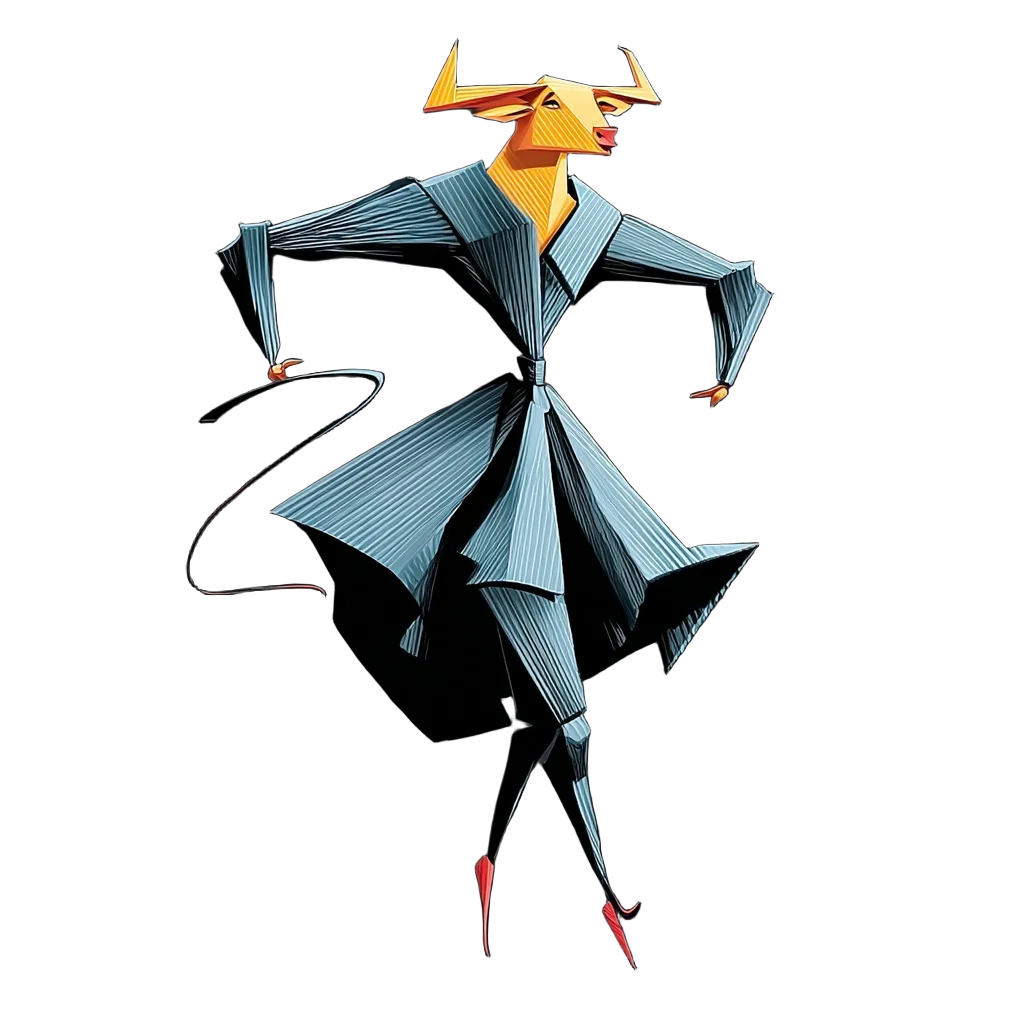
The Sensuous Reveler
A body-bound hedonist who mistakes the permanence of pleasure for the permanence of the self.
The Archetype
There is, in this particular convergence of earth and improvisation, a creature who lives with both hands pressed against the surface of the world, gathering textures, flavours, laughter, the warm weight of other people's attention, as if such gathering could be, in itself, a kind of philosophy. The Taurean substrate insists upon the tangible: the good meal, the familiar armchair, the beloved song played once more; while the ESFP overlay animates that substrate with performance, spontaneity, and an almost pagan generosity toward the present moment. Together they produce someone who is, at first glance, uncomplicated, charming, warm-blooded, and who is nevertheless carrying, beneath the applause, a stubborn and quite immovable core that few observers ever bother to notice.
What distinguishes this archetype from the more restless variants of the entertainer type is the sheer gravity of Taurean rootedness, which slows the improvisational appetite into something closer to ritual than to whim; the parties recur in the same house, the friendships are decades old, the favourite cafe is defended like a small country. And what distinguishes it from the more austere expressions of the bull is the ESFP's refusal to hoard, the compulsive spilling of comfort outward, the sense that a beautiful thing is only beautiful when someone else is also looking at it. The result is a life that appears, from the outside, to be a long uninterrupted festival, and that feels, from the inside, like an increasingly urgent attempt to keep the festival from ending.
Core Tension
The two systems agree on the body and disagree on time. The Taurean nature wants permanence, the slow accretion of stability, the same view from the same window for forty years; the ESFP nature wants the next room, the next song, the next stranger's face lit by candlelight. This produces a person who genuinely craves both a mortgage and a spontaneous flight, who will renovate the kitchen for a decade and then vanish for a weekend without warning, and who cannot quite explain, even to themselves, why neither the staying nor the going ever fully satisfies.
Beneath this lies a deeper quarrel: the sign's fear of loss versus the type's aversion to introspection. The bull knows, in its slow way, that everything it loves will be taken from it; the entertainer refuses to sit still long enough to feel that knowledge. So the knowledge accumulates sideways, in the form of stubborn moods, sudden possessiveness, unaccountable sadness at the end of good evenings.
In Love
To be loved by this configuration is to be fed, touched, remembered, folded into a life that already has its own rich furniture; it is also to be tested, quietly, for whether one intends to remain among that furniture or whether one is merely passing through. The Taurean loyalty runs deep and slow, the ESFP charm runs wide and bright, and the beloved is expected, without ever being told so directly, to appreciate both registers and never to confuse them. Betrayal, whether of trust or of aesthetic standards, is not forgiven; it is merely absorbed, in silence, and then one day the door is closed.
What this archetype seeks in return is harder to articulate than they let on. They want to be adored publicly and understood privately, to be given both the audience and the confidant, and they suffer, though they will rarely say so, when a partner offers only one of these things. The pleasure they take in loving is real, unfeigned, generous; the ache underneath it, the suspicion that pleasure itself is a fragile bulwark against a vast indifference, is something they mostly keep to themselves.
At Work
Work, for this combination, is only tolerable when it involves other bodies in a shared room, tangible outputs one can touch or taste or sell, and a rhythm slow enough to allow for lunch. They flourish in hospitality, the arts, sales, care work, craft, any domain where warmth and physical presence translate directly into value; they wither, quickly and visibly, in abstract, solitary, or purely digital environments where their gifts have no surface upon which to land. Give them a stage, a shop floor, a studio, a classroom, and they will make it hum; sit them in a grey cubicle running spreadsheets in isolation and watch a small death occur across several months.
They are more disciplined than the general reputation of their type suggests, because the Taurean layer supplies a genuine capacity for endurance, for showing up daily to the same task, for finishing what has been begun. But this endurance is contingent upon sensory reward and social embeddedness; strip either away and the discipline collapses not into laziness but into a kind of grieving inertia that no motivational technique will dislodge.
Communication
Their speech is anecdotal, embodied, full of gesture and food metaphors and the names of people the listener has never met, and it carries, beneath its easy surface, a quiet insistence on being taken seriously as a person of substance rather than merely as a good time. They will tell you the story three times, each time slightly better staged, and they will notice, with some precision, whether you laughed on cue. Others experience them as immediately warm, disarmingly present, and slightly harder to know than they first appeared.
When the conversation turns abstract or confrontational, something in them slows and thickens; the improvisational fluency remains but the willingness to be moved from a position quietly evaporates. They do not argue so much as outlast, restating the original feeling in new sensory language until the other party either agrees or gives up. This can be mistaken for shallowness by those who confuse conceptual agility with depth, and who have not yet learned that a person can think entirely through their skin.
Under Pressure
Stress, in this configuration, does not announce itself in the ordinary registers of anxiety or brooding; it manifests instead as a doubling down on comfort, an escalation of appetite, a sudden and expensive commitment to whatever pleasure is nearest at hand. The Taurean will refuse to move, the ESFP will refuse to reflect, and together they will construct an elaborate palace of distraction, dinners, purchases, flirtations, small dramas, inside which the actual problem is permitted to grow undisturbed. They are not fleeing consciously; they are simply doing what has always worked, until it does not.
When the palace finally cracks, the response tends to be disproportionate and slow to reverse: sullenness that lasts weeks, resentments that ossify into permanent geological features, a stubborn conviction that someone specific is to blame. There is no quick catharsis available to them, no cleansing storm; only the gradual, unglamorous work of admitting that pleasure was never going to be sufficient, and that the thing they were avoiding is still there, waiting, patient as gravity.
Growth Edge
The direction of growth is not toward becoming less sensual, less warm, less committed to the pleasures of the concrete world; that would be a betrayal of the genuine gift. It is, rather, toward developing a tolerance for the interior weather that the festival was designed to drown out, toward sitting, occasionally and on purpose, with the unamused fact of impermanence, and discovering that one's capacity for joy is not actually diminished by such sitting but deepened, given a floor to stand on.
Concretely, this means learning to name a difficult feeling before it becomes a mood, before it becomes a month; it means allowing at least one relationship to include silence and abstraction and unresolved tension without immediately being repaired with a good meal; it means recognising that the stubbornness which protects their loves can also imprison them, and that flexibility of mind is not the enemy of loyalty of heart. None of this will make them happier in any simple sense. It will make them harder to break, and more fully present to the life they are, in any case, going to lose.