taurus/INFJ
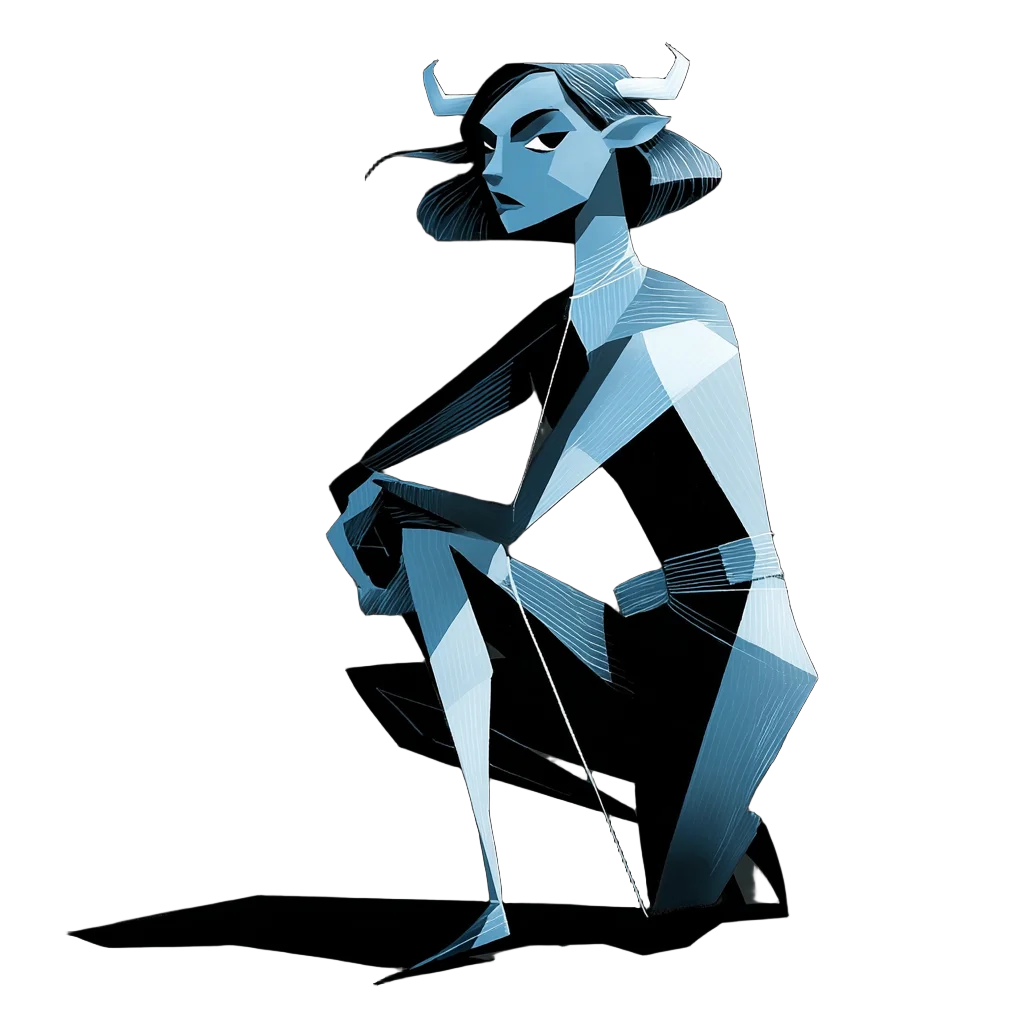
The Rooted Oracle
A seer with soil under her fingernails, dreaming the far horizon while pressing seeds into ground she will not leave.
The Archetype
There is a kind of person who holds the future the way an old orchard holds spring, quietly, without announcement, in the slow thickening of branches that no one thought to watch, and this is the one, the Taurus who sees, the INFJ who stays. Where other visionaries burn through their revelations like dry grass, this one buries them, lets them winter, waits for the frost to soften the husk. The knowing arrives all at once, whole and wordless, the way an INFJ's insight always does, but the body it lands in is a body made of clay and patience, a body that will not be rushed into speech, that turns the vision in its hands for seasons before it will call it true.
The senses and the second sight live in the same house here, and they are not always polite to one another, though they share a table. This is a soul that can read the unspoken grief in a room and also notice that the bread is slightly overproofed, that the light has moved three inches since morning, that the person speaking is wearing the same coat they wore the last time they lied. Beauty is not decoration for this one but evidence, a language the world uses to confess itself, and so the arrangement of a shelf or the weight of a particular blue can carry as much prophecy as any dream.
What gathers, over years, is something rare and slightly frightening in its stillness: a person who has consulted the deep water and then gone on making dinner. The mysticism does not float. It sinks, it settles, it becomes furniture and habit and the particular way the hands move when they are certain. Those who come close often mistake the calm for simplicity, and are startled later, the way one is startled by how far down a well goes when the stone finally strikes.
Core Tension
The vision wants to move and the body wants to stay, and between them stretches a long quiet argument that never resolves, only deepens. The intuitive part of this nature lives already in the year after next, has walked ahead into the outcome, has seen how the road bends and where it ends, while the earth in the blood insists that nothing is real until it has been touched, tested, held through a full turning of the seasons. So the future arrives twice, once as a knowing and once, much later, as a fact, and the interval between those two arrivals is where most of the suffering lives.
And there is the other pull, subtler, more corrosive: the drive toward meaning that will not let a thing simply be, set against a nature that finds profound rest in the ordinary, in the same cup and the same window and the same walk at dusk. One half of this soul is asked to transform, to serve some larger and unnamed purpose, to be the one who sees on behalf of others. The other half only ever wanted a warm room and something growing in it, and quietly suspects, in the small hours, that this humbler wanting might be the truer one.
In Love
Love here is a slow tide with a long memory, arriving not in the crash but in the patient inching up the sand, and by the time it is noticed the shoreline has already been redrawn. Devotion is total and mostly silent, expressed in the noticing of preferences, in the tea made exactly right without being asked, in a thousand small acts of attention that add up to something closer to worship than to habit. But the entrance is guarded, and the guarding is not coldness, only the knowledge that once given, this heart does not know how to take itself back, and so it will not give until it has watched a long while from the treeline.
To be loved by this one is to be seen with an accuracy that can feel like being touched, and to be held with a steadiness that outlasts most people's capacity to receive it. The difficulty is that the seeing goes only one direction unless it is invited otherwise, that the inner room remains locked while the outer rooms are lavishly furnished for the beloved, and that a wound taken here goes so deep and so quiet that the door may close for good without anyone hearing the latch fall.
At Work
The work must have a texture, must resist the hand a little, must leave something behind that can be touched or returned to, because abstraction alone starves this nature no matter how beautiful the idea. Given a long horizon and no one leaning over the shoulder, something remarkable happens: the vision and the craft fuse, and what emerges is built to outlast the builder, made with a thoroughness that nobody asked for and everybody, eventually, depends on. Speed is not the gift here. Depth is, and the willingness to stay with one thing until it yields its whole secret.
What withers this one is the open room, the constant interruption, the demand to perform enthusiasm at a pace set by others, the shallow churn of work that means nothing to anyone. Quiet is not a preference but a nutrient. A sense of purpose that can be felt in the body, not merely argued for, is the other. Where both are present, the loyalty offered is nearly geological, and where they are absent, something slowly closes like a hand over a flame, and the leaving, when it comes, will have been decided months before it is announced.
Communication
Words are spent here the way a careful person spends inherited money, slowly, with a sense of their weight, and the pauses between them are not empty but full of the sorting that happens before speech. What finally emerges tends to be unnervingly precise, a sentence that names the thing everyone had been circling, delivered so mildly that its accuracy only lands a moment later. Others often feel, in conversation, that they have been listened to more completely than they are used to, and this is true, and it is also true that the listening is a kind of study.
The cost of this economy is that much goes unsaid, sometimes for years, and the unsaid does not evaporate but compacts, layer upon layer, until it has the density of stone. What appears to be agreement is often only the decision that the conversation is not worth the excavation. And when the stone finally moves, it moves all at once, with a force that surprises even the one who has been carrying it, and afterward there is often a long silence in which the relationship is quietly reassessed.
Under Pressure
Under strain this one goes further into the body and further out of the world, retreating toward the sensory and the fixed, the same meal, the same route, the same three songs, building a small kingdom of the predictable while the mind runs its terrible clean simulations of everything that might go wrong. The stubbornness thickens into something that no longer serves, a refusal that has forgotten what it was refusing, and the intuition, unmoored from calm, turns prophetic in the worst way, reading catastrophe in every gesture and finding, in the reading, a grim confirmation.
And if the pressure does not lift, there comes the sudden and uncharacteristic breaking, the eruption from the one who never erupts, or else the quieter version, the door closing on a person or a place with a finality that seems, from outside, to come from nowhere. It never came from nowhere. It came from a long accumulation held in silence, in a vessel that appeared, right up until the moment it did not, to be entirely capable of holding more.
Growth Edge
The growth lives in the practice of speaking before certainty, of letting a half-formed thing be seen while it is still half-formed, which for this nature feels like walking outside without skin. Every instinct says wait, let it ripen, do not offer what is not yet whole, and yet the waiting is precisely what turns the inner life into a sealed room and the outer life into a performance of ease. Something small and unfinished, said aloud, to one trusted person, changes the geometry of everything.
The other direction is stranger and harder: to loosen the grip on the vision itself, to let the future arrive in a shape other than the one already foreseen. So much of the suffering here comes from having seen one road and then refusing, with all that magnificent earthbound tenacity, to notice that the land has shifted. To hold a knowing lightly, the way soil holds a seed rather than the way a fist holds a coin, is the work of a lifetime, and the reward is that the ground stays fertile, and things the seer never predicted are permitted, at last, to grow there.