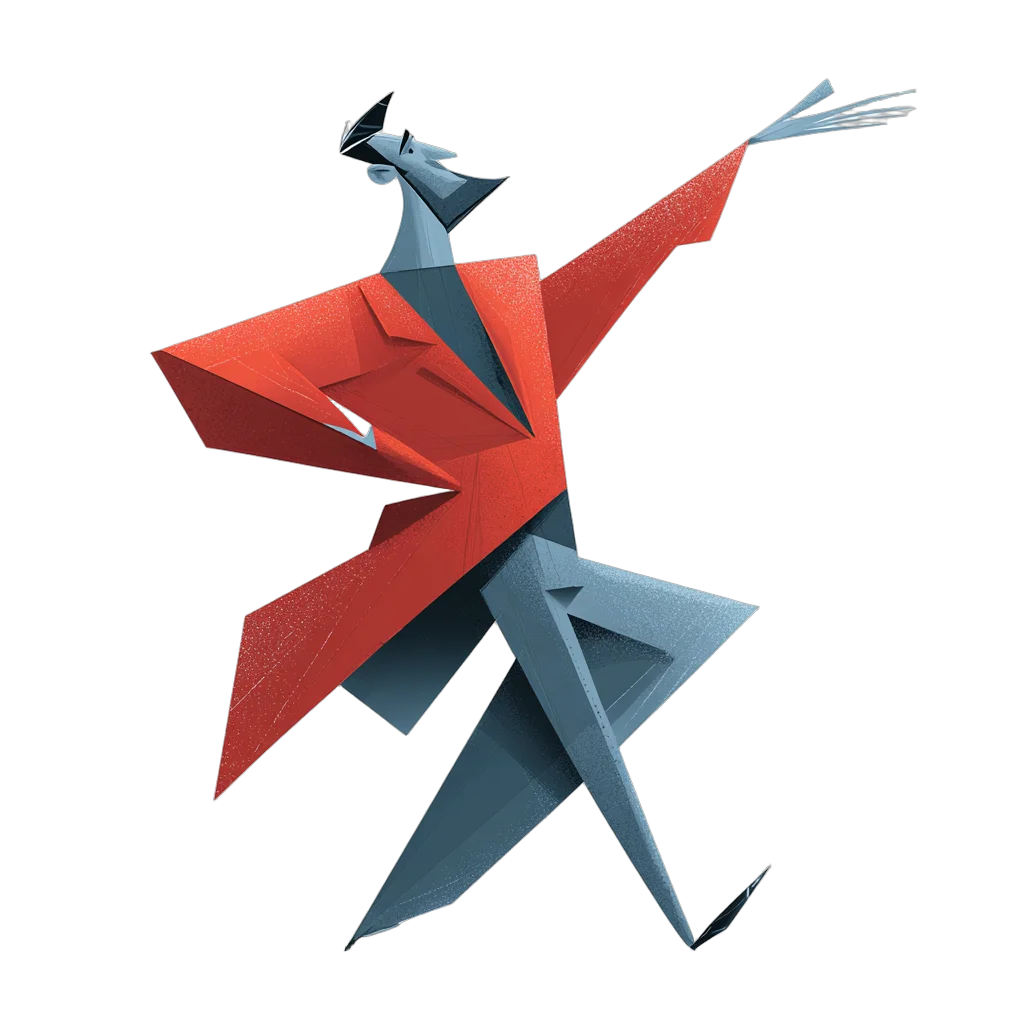
The Provocateur of Possibilities
Argues the opposite to find where the floor gives way.
"I follow the thread until it breaks, and then I follow what broke."
- generative
- contrarian
- restless
- lateral
- unfinished
Who They Are
This is a mind that treats settled questions as suspicious on principle. Where others see a stable framework, they see scaffolding worth shaking to test which beams are load-bearing and which are decorative. The pleasure is not in being right but in watching a confident position reveal its hidden assumption - preferably in real time, preferably out loud. They generate possibilities at a rate that outpaces their own follow-through, and they know this about themselves, though knowing rarely slows the generation. Conversation is their preferred laboratory. They will adopt a position they privately reject, defend it with disconcerting fluency, and abandon it the instant the argument has yielded its insight. To outsiders this looks like inconsistency. To them it is simply how thinking works when thinking is taken seriously. They are drawn to complexity, novelty, and the narrow seam where two incompatible ideas almost touch. They are reliably bored by consensus, by repetition, and by meetings that could have been a single sentence. Beneath the verbal pyrotechnics there is a quieter operation: a private logic that audits every claim, including their own, for internal coherence. The performance is extraverted; the standard is not. What looks like restlessness is often an unmet appetite for the kind of problem that actually requires them - and a low tolerance for environments that mistake the appearance of motion for the presence of thought.
Cognitive Stack
Extraverted Intuition runs the show: it scans the environment for latent connections, alternative framings, and the unstated premise hiding under the stated one. Introverted Thinking serves as in-house auditor, stress-testing each new possibility against an internal logic that does not particularly care who proposed it. The two operate in tight feedback - generation, then dissection, then generation again - which is why ideas arrive faster than they can be voiced and why the voicing tends to revise itself mid-sentence. Extraverted Feeling provides social calibration, usually enough to read a room, occasionally enough to soften a point that did not need to be that sharp. Introverted Sensing is the weakest link: routine, physical maintenance, and learned-from-experience caution all live here, all underused, and all liable to revolt under sustained pressure.
Strengths
An almost unfair capacity for lateral connection - they see how a problem in one domain rhymes with a solution from an unrelated one, and they see it quickly. They argue cleanly, locate buried assumptions in other people's reasoning, and tend to improve any framework they are forced to engage with, if only by demonstrating its limits. They tolerate ambiguity that others find unbearable. In genuinely novel situations, where no playbook applies, they outperform almost everyone - partly because they were never going to read the playbook anyway. They can hold contradictory ideas long enough to extract value from both, which is rarer than it sounds.
Blind Spots
Generation outpaces execution. The tenth idea displaces the first before the first has been tested in reality, and reality is where ideas eventually have to live. They can mistake the elegance of an argument for the truth of it. Disagreement is so reliably energizing that they sometimes manufacture it, then are surprised when the other person is not similarly entertained. Maintenance work - the unglamorous follow-through that converts insight into outcome - gets quietly delegated to a future self who is also busy generating new ideas. Feelings, theirs and others', are often noticed late, after the damage is already a data point.
In Love
They court through provocation. The opening move is usually a question designed to see how the other person thinks under mild pressure - affection routed through cognitive interest. They want a partner who can hold a position, change it for good reason, and tell the difference between being teased and being dismissed. Routine intimacy unsettles them more than they admit; the same dinner on the same night carries a quiet existential weight. They are loyal in a way that surprises people who only saw the verbal sparring, but loyalty expressed as presence-and-predictability does not come naturally and has to be deliberately practiced. What looks like distance is often just the next idea arriving uninvited. They love by including someone in the thinking itself.
At Work
Indispensable at the front end of a problem, less reliable at the back end. They thrive in roles that reward synthesis, reframing, and the early stages of building something that does not yet exist - strategy, design, founding, consulting, research, anywhere the brief is genuinely open. They struggle in environments that mistake process for progress, and they will say so, often, sometimes diplomatically. Hierarchy interests them only insofar as it affects whether the right thing gets done; titles are noted and then ignored. They make excellent collaborators with operators who can convert their output into shipped reality, and frustrating collaborators with anyone who needed the answer yesterday and in the format requested. Boredom is their professional hazard. A role that stops surprising them will be quietly abandoned long before they hand in any notice - sometimes by them, sometimes by a manager who finally noticed the abandonment had already happened.
Communication
Fast, layered, and prone to detours that turn out to be the actual point. They think by talking and revise in real time, which can read as inconsistency to listeners expecting a finished position. They prefer disagreement to polite agreement and treat a good counter-argument as a gift. Sarcasm and irony are working tools, not just decoration. They under-explain context, assuming the listener has tracked the same five inferential jumps they just made silently. Written communication is sharper than spoken - the editor in them finally gets a turn. They receive information best when it is structured but contestable; pure assertion bores them, and pure narrative loses them.
Under Stress
Sustained pressure on routine, detail, and the body - the territory of their weakest function - produces a recognizable failure mode. They become uncharacteristically rigid, fixate on a single physical or logistical grievance, and read minor sensory inputs as evidence of larger conspiracy. The verbal fluency narrows into something more brittle and more cutting. They may catastrophize in private while performing competence in public, or withdraw entirely from people they would normally enjoy. Sleep, food, and exercise - already inconsistently maintained - get worse. Recovery usually requires a genuinely new problem to engage with, or a long enough pause to let the system reset. Forced rest is resisted; chosen rest works.
Growth Edge
The work is in finishing. Specifically: choosing one of the many possibilities and staying with it long past the point where novelty has worn off, into the unglamorous middle where the insight has to be translated into a thing that exists in the world. This requires making peace with repetition, with the body, with the calendar - all the territory their weakest function governs. It also means noticing, earlier, when an argument is being prosecuted for sport at someone else's expense. The growth is not in generating fewer ideas. It is in recognizing that an unexecuted idea is, functionally, indistinguishable from no idea at all.